 미생물 항생제어 실험실
Temperature up-shift or down-shift is one of the major environmental stresses encountered by microorganisms. Especially, one of the main consequences of temperature down-shift on cells is conformational changes of secondary structures of RNAs. This cold-shock induced structural changes of RNAs have significant effects on the global gene expressions, i) by improper termination of transcription, ii) inefficient RNA degradation, iii) translation of alternatively-structured mRNAs, and iv) biogenesis of ribosome and processing of rRNA. Several cold shock proteins are produced to counteract these effects and thus allow cold acclimatization of the cell. The evidences accumulated recently revealed that translational apparatuses play critical roles to adjust cold-shock stress.
Our laboratory focuses on what happens to ribosome biogenesis at low temperature and how cells coordinate those ribosomes, mRNAs and translational factors to have efficient protein production .
Our laboratory focuses on what happens to ribosome biogenesis at low temperature and how cells coordinate those ribosomes, mRNAs and translational factors to have efficient protein production .
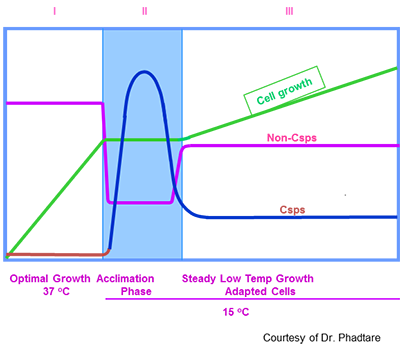
Figure 1 . Responses to cold-shock stress in E. coli.
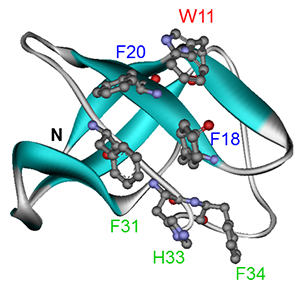
Figure 2 . CspA, a major cold-shock protein functioning as an RNA chaperone.